Episode Transcript
[00:00:03] Speaker A: Welcome to youo Odyssey Podcast where your guides, Tara and Karen invite you on a transformative journey toward wholeness and personal growth.
Each week we'll discuss topics related to the human experience and offer insights to help you along the way.
Please note, this podcast should not replace medical care or advice.
We are not licensed healthcare professionals or mental health therapists.
If you enjoyed today's episode, subscribe so you don't miss out on our future discussions.
So, explorers, let's dive into today's episode.
Hey explorers, it's Tara. Karen and I are so glad that you are here with us today.
[00:01:01] Speaker B: So glad.
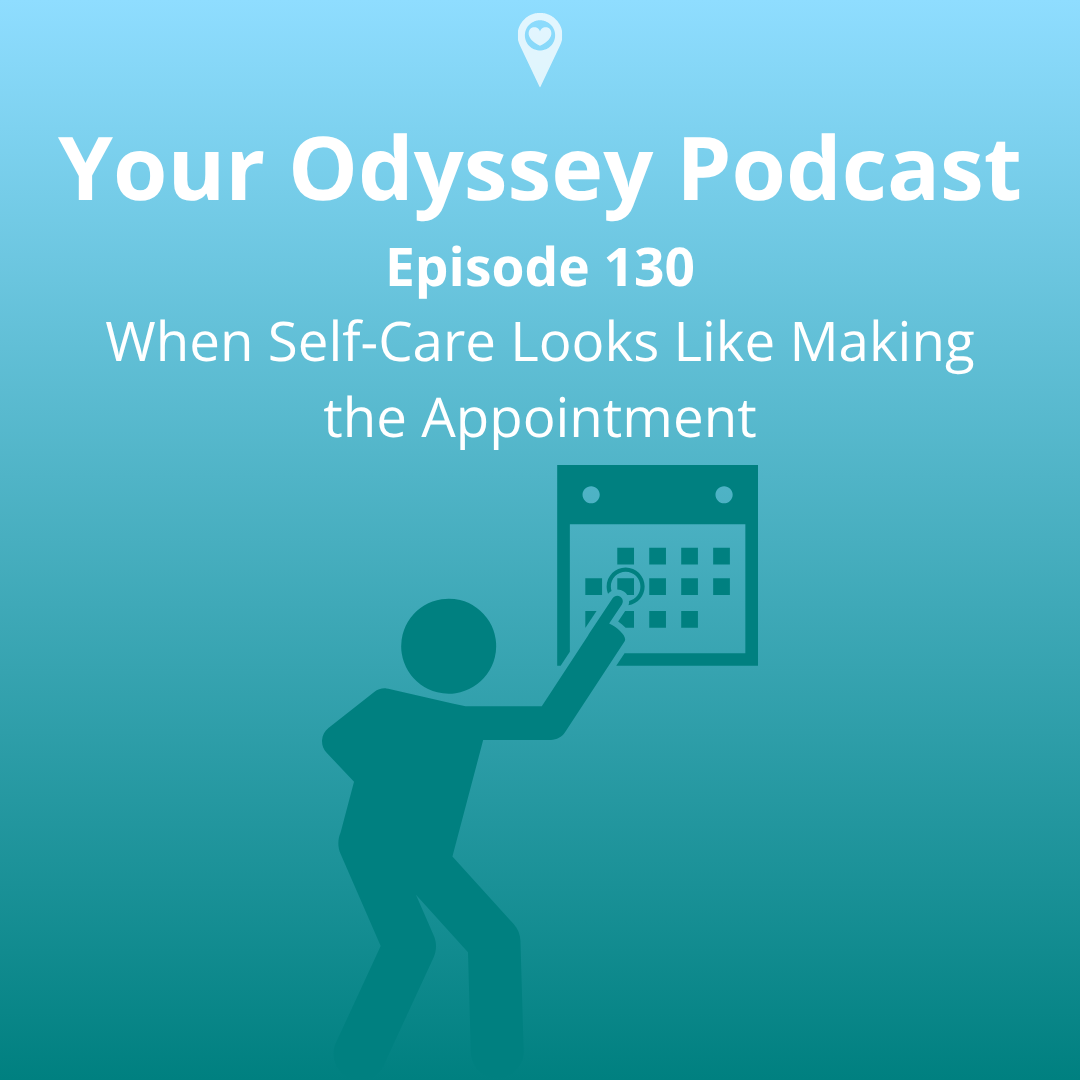
[00:01:02] Speaker A: If you have been with us for any amount of time, you know that we talk a lot about self care around here. But sometimes self care gets narrowed down into this little bucket where it says, light a candle, go get a massage, take a nap. But sometimes self care is making the appointment that you may have been putting off.
[00:01:27] Speaker B: Sometimes it's a little messy.
[00:01:29] Speaker A: Sometimes is it a little messy? So as we are recording this, just when you say a little messy, just a week ago, Karen had a colonoscopy.
[00:01:39] Speaker B: It was so fun, honestly, y' all was actually fun. Like, all right. The least fun part of it, it was still kind of fun because it was. It's wild what our bodies can do. The least fun part of it, of course, is like the not eating and the clearing out, right? Drinking that stuff is, I mean, oh, by the eighth glass, I was literally starting to heave. I don't think I get a deal, ma', am, but I made myself get the one more down and I think I was supposed to do one more and I was like, no, I'm going to bed. Not gonna happen.
Then I get up super early because the appointment's early and I look in the fridge and I have another half of this God forsaken jug to drink.
Oh my Lord.
And let me tell you, this stuff works fast. Like I did one maybe 15 years ago and it was more complicated. It was like a two day long process of fasting and then this stuff and it was like torture. This, I gotta say, was like really quick, efficient, to the point. It's like, I know that I gotta drink this up really fast. And let me tell you what, it took care of some business.
I was cleared out for sure.
And so I go in and I've got this good attitude because A, I've had one before, I know kind of what to expect. B, it is some good sleep, that Fentanyl. It is some good sleep. And you don't remember a damn Thing, right? You lay on your side and you're like, thank you, take care of me. La la la la la. And you fall asleep and then you wake up, you're in recovery and you're like, what? What even happened?
My team was all women. I had two nurses, I had the GI doctor and then her fellow. What, I don't know, what are they called when they're like just about to be a doctor, just been doing it for two years. And I was like, cool. And they were all so kind and like having some jokes, having some laughs. I gave out my it the best it could be because I just went in thinking, all right, this is a necessary thing, right?
And I think that's part of it. We know that we have something coming up that's either a checkpoint, like the annual physical or the mammogram, or if we have to do something additional, like for instance, this colonoscopy. We get so caught up in the anxiety of it, I think, and not even wanting to make the call, schedule the appointment, as we were saying. But these things, like you can approach even these things with a good attitude.
You can actually have fun. Like, I just look at it as an opportunity to connect with new people that I would not connect with if I wasn't. So honestly, it was the best it could be. Yeah, all good.
[00:04:28] Speaker A: And there really is something I find at this stage of my life now about being very intentional. Not just about spiritual and mental and emotional wellness, but about my body. I probably wrote about it in the letter. I was like, because I'm making these investments and changes in routine. So be it scheduling whatever appointment it is, or staying hydrated. I am a perimenopausal woman, so I really do enjoy getting to bed at a bedtime. Like I love my bedtime now. But these things are investments that I know that my 65, 70 year old self will look back and like, you did that. Like you invested in us living well now. So it's not like, oh, well, I don't want to do this. Or I'm like, no, I may not want to do it, but I'm still going to do it. Because this is an investment for future me.
And some of these things are not very glamorous. I do not personally enjoy going to get my boobs smashed and squished and stretched and pulled in a non sexual way. Like, I don't like it.
[00:05:34] Speaker B: I mean, it sounds good until you realize you're in this sterile room with
[00:05:37] Speaker A: this giant machine with a stranger touching me and pulling me and Then the pinching.
[00:05:44] Speaker B: No. Yeah.
[00:05:44] Speaker A: It is not glamorous. It is not glamorous. That's leading me to this question. Why are the things like the massages and the nail appointments, why are those things labeled as self care? And then all of the non glamorous stuff just becomes maintenance tasks that feel like chores. Like, why have we done that? Like, why have we.
[00:06:05] Speaker B: Why have we done that? I mean, yes, those things are all lovely and beautiful and they feel good. And massage does release toxins. That's great. It's a beautiful thing. Hydration, super important. But why, when it comes to just making the appointment, I mean, I'm not saying I'm the biggest advocate. Honestly, this will come as no surprise to you, Tara. I'm not the biggest, like, western medicine solves everything kind of person.
[00:06:32] Speaker A: Right.
[00:06:33] Speaker B: I believe we have a lot of responsibility, right, for taking care of our bodies, for taking care of our energy, for taking care of our emotions, our mental health. Like we have the responsibility is on us. We are basically creating our experience, not just the things that happen, but like how we function in the world.
And yes, thank you to all of the medical facilities and people for being there when tragic things happen or there's a car accident or. You know what I mean? Like the big, big, big things. I think it's amazing, but it is really important and you touched on it. To see the long term goal.
[00:07:14] Speaker A: Yeah.
[00:07:15] Speaker B: To see that picture, like, picture yourself at 90.
I was so inspired this morning at the gym. I was at the gym and there was a man there who, I mean, I don't know, he might have been 85, doing deadlifts with a barbell. And he's walking around like, and he's doing stuff with the balance. Like he's holding out a kettlebell, you know, and holding, like, how is he? I don't know. And he was just trying to keep his balance while he was walking, like having uneven weight. I was just so inspired. I was like, yes, because as long as you are living and breathing and here on this planet, don't you want to enjoy it? Don't you want to be your best health. Right? Don't you want to be your strongest, most flexible, balanced self? I even saw younger people.
This guy was probably 30 and he's like doing all this balance stuff. And I'm thinking, wow, that is so impressive. Like, that is not something that I would think or that I even thought about at 30. Doing the yoga poses where you're, you're on one, standing on one leg and you're holding balance. And he was doing it because he's committed to staying balanced probably until he's 105. You know, you totally touched on it. The reason we want to take care of these vehicles, these amazing. God, they are amazing. All the systems that are working together in our bodies at this very moment, all of the ways that the cells regenerate, the ways that the cells and the neurons speak to each other, like what?
It's absolutely just, it's like the wildest thing to me. Don't even get me started on growing human beings in our body as women. I can't, I don't even want to go there.
But like, our bodies are truly, truly amazing. I got to keep going because I have something else. I'm like so, so passionate about this. I was watching a YouTube channel with my son that he really likes and it's really cool because they unpack things of scale. They show you the scale of the moon to the earth all the way up to like the, the suns that are like thousand times bigger than our sun. And like, you know, they're, they're visual effects guys.
And they were talking about terabytes, how much information you can store on something really small. Right. And then they started talking about, okay, but if you want to store like everything that's in the cloud, here's the amount of terabytes. And then they went on to say that our bodies process and it's like 5 quintillion bits of information. Like something absolutely insane.
[00:09:37] Speaker A: Yeah, I can't remember.
[00:09:38] Speaker B: It was like every second or every day or whatever it was, but I was like, we just sat and looked at each other. We're like, what?
Our bodies are amazing. Take good care of your vehicle. Put good food in it and yes. Relax and breathe and do your flexibility things and go for walks, get some sun and just exercise and feel good in your body because it's going to pay off like so big.
Oh my gosh. I feel like I just.
[00:10:07] Speaker A: Karen, like she said, is really passionate about this. Is there something about your body that you pay attention to now that you did not pay attention to at 25, 30 years old?
[00:10:21] Speaker B: I mean like everything literally, like, honestly. Yeah, my, you know, as a 20 year old teenager, whatever. Like I was, you know, I, like probably a lot of other young women was I was consumed with body image and I knew I always wanted to try to be like thinner or smaller than I was. And I didn't really understand about like muscle and strength. And I didn't play a whole lot of sports or Anything. So I think having a more like, well rounded view of how I take care of my body and my exercise regimen, like the number on the scale, literally, I don't care.
I don't care.
Well, I say that, but the last couple times I watched it after, I'm like, oh, I kind of care.
And it actually was a red flag for me because I'm like, why is my body. What is. What is happening in my body? Like, I wanted to figure it out. And sure enough, I've been researching menopause and how much protein we're supposed to eat, what kinds of exercises we're supposed to be doing. As you get in your days, I've just completely changed how I look at taking care of my body and how I'm eating feels so good. I'm like, oh, okay. I care about how I feel in my body and also how I feel in my clothes.
And if I'm working out, even if I'm not my ideal weight or I'm not where I want to be, I just stand taller. I feel better, shoulders back. I'm just ready for life, ready to go.
[00:11:47] Speaker A: I. I definitely am more aware of like, or more intentional or more curious about the things that are happening internally in a body that is different than it was when I was 25 years old. Like, I used to have think I'm smaller than I am because I used to be, but I used to have this idea of a weight my mind, and I'm like, yeah, once I get to like, it's. That's just sloppy business. If I. And now here I am like 10 pounds past that weight and I'm just like, you know, it is what it is. I love my body. I love that it has carried and created and held humans and pushed humans out of my body and like, all of the things that it does even after giving birth, that I'm just like, I am. I feel like I'm more grateful for my body. I'm more curious about the things internally, like what I'm putting in my body, how I'm moving my body now that I just took for granted for a stretch of time when I didn't do any real physical movement. Now the awareness of, like, oh, I'm not as flexible as I used to be. Let me fix that.
Yeah. Because I mean, it can be fixed.
[00:12:52] Speaker B: Right?
[00:12:52] Speaker A: I can, I can do. I can make a choice and do something differently about it. And I'm not as caught up in the number on the scale because if we go by what the people say that it is. Then technically, I'm overweight, and I'd be like, your mama overweight? Like, that's where I'm like.
[00:13:08] Speaker B: Because, girl, you are not alone.
[00:13:10] Speaker A: Exactly. But if we look them, it's like. But at the end of the day, a pound of fat and a pound of muscle is still a pound. Dude, my clothes fit differently. Like, my clothes don't fit differently, but I am not as caught up in what or concerned with what someone else says about my body, how it looks, because I'm like, I'm the one that gotta live in it. Like, you don't have to live in it. Like, if I'm good with it, I'm good with it. If my husband like it, I'm good with it. Like all the rest of y'. All.
Kick rocks.
Kick rocks.
[00:13:39] Speaker B: Like, you feel good in it.
[00:13:41] Speaker A: Like, that's what matters, taking care of it.
[00:13:43] Speaker B: And you're. Maybe you are moving towards some kind of physical. You just want to feel good in it. You want to do right by it.
[00:13:49] Speaker A: I feel good in it. And that awareness of that, noticing about, like, where am I and where would I like to be? And working towards that, whatever that looks like for you. You touched on a little bit about what we both did, talking about growing humans and being mothers. And maybe not everyone listening is a mother, but maybe you have a familiar experience of being a caretaker. Have you noticed areas or are you guilty of making everyone else's appointments before you make your own? Do you remember that experience or do you have any experience with that level of neglect?
[00:14:26] Speaker B: 1,000%. When they were little.
[00:14:28] Speaker A: Yeah.
[00:14:28] Speaker B: I mean, really? Until about five years ago, maybe, you know, but yeah, when they were little, it was like, oh, they need this. Oh, they need the. And the question was never, what do I need exactly? Am I ready for? Yeah, absolutely. Yeah. I mean, now I am basically first.
I mean, you know, we have changed.
[00:14:48] Speaker A: Yeah. You need to make this appointment for you now. You know, the things. I've kept up with it for your whole childhood now I'm, like, passing the baton to do you. Like, I don't have to be the referee or the project manager of your health. Like, and I feel like. Manager, yes, project manager, your health. Like, I'm. I'm on mine. This is my time now. And I hope that, you know, the things that you see me do now for my body, like, they're seeping in. Like, there are seeds in the garden of physical health that I'm planting not just for, like, my kids, but for, like, everyone connected to me. So, yeah, Absolutely. Yeah. Like the kids. When is the last time I had a physical? I don't know.
But now it's just like, I don't know. I know I did. Like my appointment said, I don't know what y' all got going on, but.
[00:15:38] Speaker B: Yeah, yeah, yeah, I know these are the things that you need to do
[00:15:41] Speaker A: every year because we only have this one beautiful body. Unless y' all know a secret that I don't know where we can, like, transport our consciousness into another body. Like that movie. I think it was like Jordan Peele's get out if you haven't seen it. Sorry, that was a spoiler what you're talking about.
[00:15:56] Speaker B: Oh, my God.
[00:15:57] Speaker A: But like, prevention is an act of care. Like, there is maintenance and prevention. Yes, there is something the psychologically, fundamentally that happens, like when you are taking action before there's a problem. We have been conditioned to respond better to urgency. And I told you this week about, like, now I just refer to urgent care, the whole situation in parentheses. Because there's nothing urgent or caring about the way that the system is set up here. But we respond to, oh, my God, It's. It's always in parentheses. Because it ain't urgent. And it's not. There's no level of care. And I'm sorry, y', all, but that's just the way our system is. But, like, we are much better at responding to like, the urgency and the emergencies than we are at maintaining our wellness. And that is.
It's sad.
And I feel like we, we as a people, individually, like, we gotta have a grassroots wellness experiment that happens here. So we're not waiting until things are wrong before we start doing something about it.
Like, you take your car for oil changes and do things like that.
[00:17:02] Speaker B: Really, it's about paying attention. Right? I mean, I know we talked about this as like a self care or self awareness whatever month, but it's like, are you just paying attention? Are you asking yourself, how do I feel? Do I want more energy?
What are some small habits that I can sort of create and maintain?
I think it's just important to notice.
I think when people put their maintenance and their preventative care first, they're acknowledging that they're.
That they're worthy.
[00:17:35] Speaker A: Yeah.
[00:17:36] Speaker B: Acknowledging that I. I care about myself. I care about this body. I'm blessed to be here. I love being here. I'm gonna take care of it. As I'm aging, I'm like, oh, this you don't take it for granted. Like, don't take this thing.
[00:17:50] Speaker A: Different perspective.
[00:17:51] Speaker B: It is Completely different. I'm looking ahead, going, oh, dang. I. Yeah, I am going to make some changes. I am committing to this. I will be in the best physical shape of my life. I. In the next year. Like, it's so important. You're worth it. You're important.
We need you. We need you to take care of yourself.
[00:18:11] Speaker A: And I don't want to gloss over the fact, like, we have a very broken health care system here. So I don't want to gloss over the fact, like, you may want to do something, but there are various barriers here or time or cost. Like, I grew up in a town that is now basically a medical desert. Like, there is no preventative care within a certain radius of where people are. So there are other barriers to care that I don't want to gloss over and just say, it's all sunshine and rainbows. If you want to do it, you'll do it. But there are very real things for a lot of people here that they can't do even if they want to do this, like, as a judgment or an indictment.
[00:18:55] Speaker B: Thank you for bringing that up. Because it is true. The system, I mean, soup to nuts. There's a lot of things we can say about it.
And the fact that so many people don't have access to regular and quality medical care is honestly a travesty. It's an embarrassment to this country that we say is so great and so wealthy. Yeah. How about boots on the ground? How about we get down and see what's really going on across the board?
[00:19:25] Speaker A: So we're not talking about any of those things, but the things that we can control. So let's say you do have access to medical care, but dealing with some of the things, like maybe a fear or a discomfort or the biggest one is like, I'm too busy to do that, or, like, the lie that we have all of this time to, like, I'll do it later, like, I won't do it now, or the avoidance of, like, not wanting to know. Like, there, if that is you taking the time to kind of dissect that, to get underneath, like, what is that? Because if you have it available to you, remember, there are those that don't that wish they did. So take with that what you will.
[00:20:04] Speaker B: So really, really important. Adding that, you know, that's really important.
Yeah. I was literally going to call it a psa, and I'm like, oh, maybe I don't want to diminish it.
[00:20:13] Speaker A: Yes. Yes. Okay. We. We talked about the screenings and the prevention. And, Karen, you said a Little bit earlier about you just went to the gym this morning. So I do want to talk about how movement also counts. I have mentioned it ad nauseam at this point. The practice of walking five out days a week with my husband in the morning or just walking in the morning. Strength training.
[00:20:36] Speaker B: 5K, right?
[00:20:37] Speaker A: And the 5K five days a week.
[00:20:40] Speaker B: Love it. I love it.
[00:20:40] Speaker A: Strength training and yoga. Which brings me to the question, has your why for moving your body changed? It's not like for me, it's not just like, oh, exercise is good for you. You should do it. I really do like how I feel. I love the adrenaline, the endorphins, all of the good things that flow afterwards. I may not always feel like it, but I always feel better after I do it.
[00:21:02] Speaker B: Yeah, I used to do some certain workouts. Like this is when we were using DVDs and I remember the woman saying, no matter how you feel coming into the workout, I guarantee you you will always feel better leaving the workout. And it's so true. And even if you have five or ten minutes, right, get down on the floor and do some modified push ups. 5. Just do 5. Or some jumping jacks. Just wherever you are, just take five minutes here, 10 minutes there. Like, it doesn't have to be like you go to the gym for two hours and you're like lifting extreme heavy weights. And it doesn't even have to look like you're training for a half marathon or marathon. It's just whatever you can do. And I too, you know that I resonate with the walking. I love walking. I love, love, love walking. Like if we walked as much as like we used to say when we were hunter gatherers, like we, we wouldn't have the health problem.
[00:21:58] Speaker A: Yeah. And depending on what stage of life you're in or what level of physical mobility, strength, movement may look different for you when I, I feel like restarted or reintroduced myself to fitness. It was pre pandemic. I was doing cardio bar doing these things and kept doing it through the pandemic. Took a year or two off. But like the things that I did five, 10 years ago are not the things that I do now. And that's because I am listening to my body as it changes over time and not trying to be like, I'm superwoman, I'm gonna do it. I still do not like push ups. I used to hate them, but I.
[00:22:36] Speaker B: So you're, you're. The vehemence has lessened.
[00:22:40] Speaker A: I don't, I can them, I can still do them. They are still not My favorite. But I can do them, and I'm not, like, attacking them, but, like, discounting them before I even do them.
[00:22:50] Speaker B: We talked the other day about the tricep dips.
[00:22:52] Speaker A: Oh, tricep dips. Yeah. Yeah. And then I just realized one of my favorite. Well, two of my favorite poses. What do you. I don't do.
It's not even yoga. It's just.
[00:23:03] Speaker B: Oh, it's not yoga.
[00:23:04] Speaker A: Maybe. Anyway, two of my favorite floor things are essentially. I didn't even realize it. Are essentially the same exercise, but 180. I love doing a dead bug and I love doing bird dogs. And I was like, wait a minute.
I was literally doing it, like, two days ago.
They're the same thing, but
[00:23:25] Speaker B: one of
[00:23:25] Speaker A: them make the connection. Yes. Yep.
[00:23:27] Speaker B: Oh, man, that's cool.
[00:23:31] Speaker A: Yeah. Dead bugs and bird dogs. I'm like, oh, okay. Anyway, I want to go, right.
[00:23:37] Speaker B: There's all these different aspects of fitness. I mean, there's, of course, the mental benefits and the physical benefits, but I think that finding something that you enjoy and starting there is so important, right? Because then you're going to continue, and then you'll maybe branch out, so. Because there's, like, what? There's flexibility, there's balance, there's strength, so there's cardio. There's all these different ways that you can approach fitness. And there's cycling, and there's walking, and there's running, and there's. Whatever it is for you, you know, just find something that resonates with you, that you feel, like, excited about doing or at least you don't hate.
[00:24:12] Speaker A: Yes. And I think that leads to a very interesting perspective about listening to your body versus just observing and making it. Like, these are just, you know, I'm just getting old. That's just what happens. The lies. But, like. And it doesn't require things shift and change over time, but it's about developing a wellness as relationship with your body. We're not saying, like, oh, you take care of your body perfectly, but it's like, do you have a relationship or are you in conversation with your body?
[00:24:41] Speaker B: As we know, no relationship is perfect. Right. And no relationship stays the same. We learn to sort of pivot. We learn to move with it and be like, a little bit like the witch willow tree, Right. Like, we're just rolling with it. Same thing with your body. Like, something that felt great to me 10 years ago. I'm like, oh, hell no.
[00:24:58] Speaker A: No.
[00:24:59] Speaker B: Replaced by four other things that I'm like, yeah, you know, that feel good in the body, right? Yeah, absolutely. Really good point.
[00:25:06] Speaker A: This non perfect wellness as a relationship with our own bodies. Like we talked about it, like being incredibly attentive to not just like our kids, but the people around us to their needs. But like weirdly, strangely casual about our own needs is black. Oh, I'll sit with, you know, you with at your appointment or whatever. But meanwhile you sitting there like, I had this weird thing that happened and I had a hitch in my back for eight months and it's probably fine. We do this weird dance with ourselves, like, oh, it's fine, you know, just shake it off. But meanwhile let it be someone else. And we're like, no, you need to go right now. But we don't take that same level of urgency or seriousness or attentiveness to our own overall until you start doing it. You'd be like, no, I'm about to go get this checked out. That's not normal.
[00:25:50] Speaker B: The relationship we have with our bodies. There is communication that happens. Right. Our bodies give us clues. Our bodies show us things, it tells us things. And it's really important to understand how your body speaks to you.
[00:26:02] Speaker A: Yes.
[00:26:02] Speaker B: And to really listen to what it's saying and advising. Our bodies are highly intelligent. Yeah, right. But the whole system, soup to nuts.
[00:26:11] Speaker A: All the quintilian of terabytes.
[00:26:13] Speaker B: Yes, all the terabytes. Like I'm just like, there's a lot going on and you might want to listen, you know? Yeah. For sure. It's ever changing. As you said, like any relationship.
[00:26:26] Speaker A: Yeah, yeah.
[00:26:26] Speaker B: So love your body, love yourself.
[00:26:29] Speaker A: Oh my goodness, please.
And love yourself. And we are not by any means, you know, saying that we are experts in physical wellness or we figuring it out as we go too. So we're not saying you need to completely overhaul your wellness routine and get in perfect relationship or perfect harmony with your body. But the smaller ask more, the more grounded as is. Like what is one thing that you have been putting off that you are willing to take care of this week today? Like if you need to schedule. Yeah. If you need to make the appointment, that's the thing. Or you just make the phone call.
[00:27:06] Speaker B: That's it, call back.
[00:27:07] Speaker A: Or you know, committing to getting more rest or asking your healthcare provider instead of Dr. Google just one thing, just
[00:27:17] Speaker B: do the one thing that, that's actually leading me to some really funny thing because I have a birthday card for my son. I'm gonna see him later.
And I was at Scrap Exchange the other day and they have this little basket of stickers by the where you check out the cashier.
And I was looking through, and I found this one. I was like, oh, my God. This is going on my son's birthday card. It's a picture of a dog in a lab coat with stethoscope around his neck. And he says, trust me, I'm a doctor dog ter. Oh, my God. That is hilarious. And that is his birthday card.
[00:27:52] Speaker A: Yeah.
[00:27:53] Speaker B: You know your body. Like, we each know our body better than anyone. Like, right. Like, we. We really do. Like, even though. Even if we've been disconnected from a long time, even if we haven't been listening for a long time, like, we know our bodies, we know when something's off or not quite right. We know the things to follow, the maintenance that we're supposed to be doing, according to the American Medical association or wherever you are listening, according to. But just be aware.
[00:28:17] Speaker A: Be connected.
Yeah, I want to connect with my body and dance.
[00:28:21] Speaker B: Oh, girl. Let's dance.
[00:28:24] Speaker A: Oh, goodness.
[00:28:25] Speaker B: Oh, my goodness.
I can't wait.
[00:28:28] Speaker A: If you haven't.
If you haven't already gotten the message, like, caring for your body isn't and doesn't have to be the most serious thing or that you have to do or you're supposed to get right. It is just making that appointment and paying attention and taking action.
So sometimes caring for your body is just moving your feet. So the name of this song is Move youe Feet by Junior Senior.
Check out this week's song on the YO Podcast playlist on Spotify.
[00:29:10] Speaker B: Well, good thing I had already done cardio this morning.
What?
That was just a party in the street, right?
[00:29:16] Speaker A: It was we're going downtown. Just.
[00:29:21] Speaker B: Is he saying going downtown in the background? Like, he's like, going downtown, going downtown.
I love that.
[00:29:28] Speaker A: Yes. The lyrics of the song everybody move your body and be united. So whenever you're in a space, there is something very uniting about a group of people together just dancing and having a good time. Time.
[00:29:39] Speaker B: So it is the essence and epitome
[00:29:41] Speaker A: of joy, is it not moving your body in community? I feel a lot of things are or enjoyed or experienced differently in community. Yeah.
[00:29:53] Speaker B: Yeah, for sure.
[00:29:54] Speaker A: All right. That was fun.
[00:29:56] Speaker B: Oh, so fun.
[00:29:59] Speaker A: Again, I just want.
This is not just an episode about all of the appointments we make or we have to make or all the things that you should be doing and all the ways that you could be taking care of yourself.
We not. That's not what we're doing. So that same spirit today's question is about is alone. Like, we're not. We're not doing any of the physical Wellness shaming. So the question of the day is, what's one health or wellness habit you are genuinely proud of?
[00:30:43] Speaker B: I've just been making so many changes lately that I'm loving. I'm really proud of how I've adjusted what I, how I notice and am mindful of what I put into my body and notice how I feel afterwards. Like, yeah, if it was something really good and healthy, nutritious versus a pop tart.
Like for me it feels different in my body and I'm noticing it now. Like I'm really aware of like, oh, that actually doesn't really feel very good or life affirming. Like my pancreas just like, hey, we got an insulin. Like, everybody's like, let's get to work. Holy. It's a pop chart or whatever.
Incoming, incoming. Everybody get at your stations.
[00:31:26] Speaker A: So noticing your body and how about you getting into it?
[00:31:30] Speaker B: Yeah, yeah.
[00:31:31] Speaker A: As I figure out the wellness or the movement routine that works for me. So not thinking, you know, if someone else is a gym girly, I'm not necessarily a gym girly. And I'm like, I love that for you. But mine is I'm at home and this and designing a routine that works for me that I actually feel good about and not getting caught up in what everyone else is doing because I'm doing what one I want to do and which feels good for me. So like, yeah, so being intentional about how I design and implement and stick to like or even giving myself grace in the days. Yeah, exactly. Be like, I'm not feeling it. So now I'm adjusting what I need to do or what I do actually. So yeah, that's my one.
[00:32:17] Speaker B: I love that.
Right? It's like we're ever changing. Just pay attention.
[00:32:22] Speaker A: Yeah, yeah, yeah. I found a quote from American entrepreneur and author Jim Morone. Don't ask me what he entrepreneured or what he wrote because I don't know.
But Jim said, hashtag truth. Take care of your body. It's the only place you have to live.
[00:32:42] Speaker B: I mean that sounds so dang simple. It's like duh, you know when you say it. But yeah, it's your house.
Welcome to my house.
Yeah, it's your house. It's on your body.
[00:32:56] Speaker A: It's the only place you have to live.
[00:32:58] Speaker B: Oh, I love that. Thanks, Jim. Thanks, Jim.
[00:33:01] Speaker A: This has been a very fun exploration, explorer. Since it is the only place that you have to live, we hope that you understand that your body isn't just another self improvement project. It is your home.
So may you care for your body because it's carrying you through this one wild life.
[00:33:26] Speaker B: So good, so good Explorers. We have gone from colonoscopies to boobies, to cardio to doctor appointments to moving your feet like to dancing. It has been just such a fun, beautiful experience.
I hope you've enjoyed it as much as I know Tara and I have. We love you so much. Take good care.
Thank you to Queenies in Downtown Durham for the use of their community podcast studio and for welcoming us so warmly Each week.
We'd like to give a shout out to Coco Cinnamon, the birthplace of 1023 Media and the yo podcast. Please support your local women owned minority owned coffee shop in Downtown Durham, Brought to you by Durham based 1023 Media, a heart centered woman owned multimedia company.
[00:34:30] Speaker A: Sam.