Episode Transcript
[00:00:03] Speaker A: Welcome to youo Odyssey podcast, where your guides, Tara and Karen invite you on a transformative journey toward wholeness and personal growth.
Each week, we'll discuss topics related to the human experience and offer insights to help you along the way.
Please note, this podcast should not replace medical care or advice.
We are not licensed healthcare professionals or mental health therapists.
If you enjoyed today's episode, subscribe so you don't miss out on our future discussions.
So, explorers, let's dive into today's episode.
Hey, explorers, it's Tara. Karen and I are so excited that you press play today. What happens when you've built this life that looks very fulfilled and follows all of the things that you're supposed to do from the outside, but something inside of you is asking for attention, like something's a little off here. I'm not sure what it is.
Usually the first indication isn't that there's a change that needs to happen. It's just this subtle feeling that you can't ignore anymore. Our guest today has walked through a series of changes in her life, and it's been culminated, I guess, into her memoir. But our guest today on the pod is Jeannie Duncan. Jeannie, Karen and I are so glad that you're here with us today.
[00:01:41] Speaker B: So dang excited. Oh, my God.
I'm just trying to keep it cool. I'm just trying to be cool. Jeannie's like a rock star to me. I didn't even know that I felt this way.
[00:01:50] Speaker A: You are fangirling really hard.
[00:01:53] Speaker B: So I am. What on earth is happening?
[00:01:56] Speaker A: Okay, yes, Jeannie, tell our listeners about yourself.
[00:02:01] Speaker C: Oh, that's a big, open question.
[00:02:05] Speaker B: That is an ocean of a question. Whatever it is you want to say, however you want to introduce yourself.
[00:02:12] Speaker C: It's funny, we were talking about the song Brave by Sarah Bareilles, because you had asked me that ahead of time. I think what I want to name is that I believe our purpose here on this planet, like all of our purpose, is to. To really get attuned to who you are, to really know yourself, which, of course, is never a place you arrive, you know, maybe for a split second, and then you're already different. To truly know yourself and to. To be able to live yourself in the world.
And so who I am is.
Is this individual that wants to help people find that. And I'm. I'm always. Of course, I'm in search of it myself.
And who I am is, you know, I'm an entrepreneur. I have my own business. I've done this work for 16 years. I'm an executive coach, team coach.
I work with organizations and executive leaders to do just that, to really know who they are, to live who they are. If you're an organization, it's what's your mission, what's your focus, what's your purpose and how do you live that? And I help leaders and organizations just get the stuff out of the way, the fog out of the way, the weeds out of the way so that they can make their way to that.
Because if you're here, you know, you're here for a reason. There's only one you.
And with an organization, there's only one organization, there's only one you with the people that you have that are gathered here right now to do this work.
And so let's get on with it, you know, let's get busy with it. Let's not waste one more day.
So I think that's who I am in the world, that's who I try to be in the world is to, to have that clarity and that, that bravery, that courage to do that.
[00:03:53] Speaker B: Yeah, there is no try. You do.
[00:03:57] Speaker A: As you were talking about executive leadership and the work that you do in your business, when you are working with clients within the organization, do you find that there is some level of that same work like helping those executive leaders identify their vision, their mission, and how it aligns to the organization's mission?
[00:04:17] Speaker C: Yeah, often I'm working with a leadership team of an organization and it's helping them see that they are a collective because often they see themselves as a group of individuals around the table. They're on the team, but they're a group of individuals.
But interestingly enough, I think you really do have to be clear on who you are and what you bring, what your values are, before you can connect to another, like another person and then to a group, like in a team. I think you have to be clear on yourself before you can then broaden beyond your own self boundary and merge into others in relationship.
[00:05:00] Speaker B: I think that's so poignant. I want to stop for a moment and just notice that because I think that could, I believe that's what is tricky about society and communities and specifically, you know, a microcosm of an organization.
Right. If the people involved aren't developing and evolving and connected, right. Coherent knowing their gifts, their authentic talents, what they bring, who they are, it can become very easily a super dysfunctional family.
Right. So like it's really that self awareness is so important and I think you said it so well that in order to really contribute and Be part of a group, right. Not feel threatened to know that you are valued, that you are worthy of contributing something. Like, you have to have that knowingness within you to be able to then coalesce into this powerful group, this leadership. Yeah.
[00:06:00] Speaker C: Gotta be clear on who you are and what you bring. You know, it's funny. It comes from this book called Boundary Spanning Leadership.
It's a book I became aware of when I was at the center for Creative Leadership, and it's all about it. Before you can span boundaries, you have to be clear on yourself. Or before multiple teams can come together for a broader project, each team has to be clear on who they are, what they offer, and also what they don't bring, maybe their gaps.
Because that's the beauty of coming together in relationship with others, is that everybody brings something. And what might be your strength might be someone else's area for development or gap, and vice versa.
[00:06:43] Speaker B: And I think that's so true. Like, I was picturing the human body as you said that. Right. Like, all the different systems that are going on, it's not like the kidneys are like, you know what?
I don't really want to process urine anymore. I want to process air. I want. Hey, lungs. Will you trade places? Like, what?
Like, that's just what you do. That's who you are. You know, that's not happening. Like, lean into the magic and beauty of who you are and how you serve, I think is beautiful. Yeah.
[00:07:11] Speaker C: I can't unsee that.
That was not silly. It's just like, wow, I can't unsee that.
[00:07:18] Speaker B: Oh, I don't know why, but, like, the kidneys and lungs, I felt like those were.
[00:07:21] Speaker A: I mean, they're dual and dual, and they're like, yeah, I can see it. Gd, I feel like a lot of your work, especially as you're talking through executive leadership, creative work, ways to lead teams, a lot of it is discovering not just your place in the organization, but discovering and living your own personal truth. Can you walk us through your journey of that? How did Jeannie Duncan become this woman of purpose in helping creative executive leaders live that out themselves?
[00:07:55] Speaker B: Yes, I know, I know.
[00:07:56] Speaker C: You have a theme going. You're trending now.
[00:07:59] Speaker B: Yeah.
[00:08:00] Speaker A: Wow.
[00:08:01] Speaker B: Hashtag. Yeah. And I, I, I think that stems from right when we were reading about. I think when we were both reading about you. Like, what I didn't know is I actually didn't even know you had been the director of the Greensboro Arts Council. I had no idea. Like, I know that you love the arts. I know that you love music. I, I, I know this about you personally, but I did not know that that was to me, when I met you, you were already in, you know, coaching, leadership coaching and working with organizations and, and, you know, Lynn had referenced that, you know, ccl, and I was always like, what is that? You started out as the director of the Arts Council?
10, 15, 16 years, something like that.
[00:08:36] Speaker C: Maybe I was there for like, 13 years. I was CEO for about, I think it was seven or eight of those years. Wow.
[00:08:46] Speaker B: Okay.
[00:08:47] Speaker C: Yeah.
[00:08:48] Speaker B: So, okay.
[00:08:49] Speaker C: So long ago now.
[00:08:50] Speaker B: Walk us through that. Yeah, from being the, like, Arts Council, which obviously I know as a, as a director, right. You're, you're connecting with other executives and other, you know, leaders in the area, whether it's to the Chamber of Commerce or whatever.
But to be a leader in that capacity and then to move into, I want to help others be a leader. Like, what was happening there for you?
[00:09:17] Speaker C: When I was leading the Arts Council, when I was at the Arts Council, I loved what the organization stood for.
It was all about helping resource artists and arts organizations.
So the extent of my career, even before the Arts Council, was as an arts administrator.
And I was first in kind of the development channel for that. So I came up through the ranks as a fundraiser.
And the Arts Council is kind of like a united way for the arts. So most people are familiar with the United Way. So that's what the Arts Council does, only it does it for artists and arts organizations. So it's resourcing them for funding, not, you know, just information. If an organization is experiencing some kind of really challenging change or transition, we help resource on. What do you need to know? Like, if it's about a merger or a dissolution, it's connecting them with attorneys and financial advisors and so forth and so on to help them navigate whatever it is that's before them. And so I loved that work of leading an organization that was about that. And of course, we also were a grant maker and that kind of thing. We had a number of agencies and artists that relied on our funding programs. It was Greater Greensboro. So it was in my community where I lived, worked, helping make my community a better place through the arts.
And I reached a point in 2010 where I just felt complete with that work. I'd been there a long time, and what I had loved doing most was that service of helping others, of being that strategist, that resource strategist.
It's like I felt complete with what I had set out to do. So I chose to leave.
And that was Something that was really interesting because no one understood that.
No one.
Not my spouse, closest friends, not my board, not my staff, no one.
[00:11:19] Speaker B: Nevertheless, she persisted. Right.
[00:11:21] Speaker C: Who just leaves? Who just leaves? You know, when you're in a position like that, they expect you to go on to maybe a larger organization, a bigger city. And I just knew that I had completed my mission there and I needed to clear my head because that is a very, very consuming role, a leadership role like that. You're not just the leader of an organization, it's a leadership role in the community. And you're always on, never off, every day, day and night, if you take it really seriously and are passionate about it, which I was. And I needed to just stop. I needed to get off that belt.
[00:11:55] Speaker B: And.
[00:11:55] Speaker C: And so I did. And I call it a self imposed sabbatical, to clear my head, to get to think, to sleep, to get to know my family again, my friends. Because there was no time, felt like no time for anything. And I was in that hustle culture at that time. That was a stretch. In my 30s, my entire 30s, I was so driven, achieve, succeed, climb, climb, climb, go, go, go.
And at 40, I stepped down from that and took about a year off.
And I recognized the luxury that that is and the privilege that that is to be able to do that, because so many people have to make changes and navigate and pivot and don't have that ability to breathe and rest and restore.
And I'm very grateful that I was able to do that and that I had a family who was supportive of that.
And what I grew to new in that time where I could think and plan and reflect, is that I wanted to do the elements of what I loved about that position.
And those elements were helping organizations and leaders navigate complex things about their organizations. And they happened to be in a sector with a mission that I really loved, which is arts and culture. But I didn't have to continue in arts and culture, but that's the way I started my business. I took that time and I decided I wanted to start my own business, which had kind of been a seed in me for a long time, because my parents were business owners too.
And so I started my own business and it was kind of like, ta da. Come out to my friends and family. I'm going to be a consultant.
They're like, really?
[00:13:36] Speaker B: Surprise. I'm an entrepreneur.
[00:13:39] Speaker C: You're hanging a consultant shingle out after all this time of thinking and reflecting, that's what you're going to do? Wow, that's really ingenious.
But I didn't care because that's what I wanted to do. I wanted to go and serve and support other organizations to help them with strategy development and organization assessment and different kinds of organization change and transitions, like leadership transitions and all kinds of changes.
[00:14:07] Speaker B: And you knew you had success in this, right? You knew inherently, I'm good at this. I can branch out and help more people and more, you know, industries, more types of organizations.
[00:14:17] Speaker C: Yeah, that's what it was about, Karen. It was instead of just being seniorly focused on one organization, one group of leaders, one community, I wanted to go and do this elsewhere. I really didn't want to do it local at all. And so I didn't. And I was fortunate with that. In my role at the Arts Council, I had served on national boards. I had a national network, you know, national conferences, all those things that you do when you do that. And so I had built this national arts network, and that's where I started, was with those organizations and being a coach, an executive coach to those leaders and an advisor to the organizations on strategy and other things. And that was 16 years ago.
[00:15:01] Speaker A: What I love about both of those decisions, the decision to leave at what someone would say, you're just getting started. This is the peak. Go seek more. And the decision to start your own business was like you were honoring yourself. There was no level of, I need to do this or let me see what X, Y and Z person thinks about what I'm doing. What you said multiple times is, you did it because you wanted to. You knew that what your next step was was not to stay in this position. Or you knew that your next step was bigger than the limit of you within one organization. Like, you're honoring yourself. Like, oh, let me say. What is the question that I want to say first? Yes. Honoring yourself in both of those decisions. Is there a or synopsis that you could give someone about what that requires? What does it require to honor yourself and to stand firm in your decisions when everything and everyone else around you is like, is that right?
[00:16:01] Speaker B: Like, are you sure? Oh, like, when there's doubt, what is your take so certain?
[00:16:06] Speaker A: Yeah.
[00:16:07] Speaker C: Yeah. What does it take?
[00:16:08] Speaker A: What did. Yeah.
[00:16:11] Speaker C: Well, I'm thinking of those voices around me that mattered the most that were differing than my own.
The first one that comes up was my husband at the time, where it was kind of like, you want to do what? You know, kind of the taking the time off, the sabbatical.
And I like to say I pretty much took a year, but we never agreed to that.
And not to intentionally cause unnecessary hardship, you know, in our family. But, you know, there was a. Let's take a couple. How about a couple of weeks off?
Okay. How about four weeks? How about, you know, so I knew I needed, I needed a refilling or restoring. I was so empty, like, just drained. Burned out, some people would say burned out.
So I was. I was burned out. Yeah, it's. It's all right. And then there were others that the voices were, you know, people thought I was sick. People thought I had cancer or something that I wasn't naming because, like, who does this?
[00:17:18] Speaker B: Wow.
[00:17:19] Speaker C: Like, it was so foreign. Like, who does this? Who steps off the.
That treadmill, you know, when some from the outside would consider you're at the top of your game. You're, you know, why are you stepping away from this?
And so I had some board members of mine at the time, the organization, who thought that the board had asked me to resign, for example, because again, who would walk away from it? So your question was, how do you, how do you stay true to what you know when everything around you is maybe saying something else or encouraging you otherwise? And it's.
I think you have to trust your knowing.
Trust your knowing. I knew I needed some time. I could take it. I was very grateful for that. I knew I didn't. Well, I may ultimately decide to go lead another organization, bigger, larger in another city kind of thing, but I needed to vet that internally. I really needed to tune into what is it that I want? What impact do I most want to make? What difference do I most want to make? And I was at the end of a decade and beginning of another. So it was like, it's kind of happened to me in my life that way of, yeah, what do I want? You know, when I'm at 50, what do I want to say that I've done in my 40s? And so I really did look at that. Instead of just being swept up into something, no, let's take a pause, let's take a breather, let's check in and see what's really calling me forward,
[00:18:51] Speaker B: Beautiful awareness and the wisdom to do that. And yes, I hear you say that you had the luxury of doing that.
However, anyone can do that. Like sort of give themselves the emotional space, right. The processing time to do something, even if they are still at the other endeavor or whatever it is. But if you feel something pulling at you, you can play with that and spend time with it on your quote unquote off hours, right? Even if it's five minutes, right there's ways to fuel the dream and fuel the vision and still just sort of be in your day to day.
But it requires that awareness and that really a commitment to yourself to know, if I'm feeling there's something more, then there's something more, or else something else, something different.
[00:19:36] Speaker C: I love what you're naming about, you know, if you're feeling something more. So that's where this all started is when I was in the role at the Arts Council, I felt this.
I called it things like restlessness, this stirring.
I didn't know what it was, but it would not go away.
It's almost like this turbulence inside your body, this rumbling that won't stop. And I'm like, what is that? What is that?
And I wrote about this in my memoir. It like, I was a runner at the time, and I would take it out on a run, literally saying, what is this? What is your message? For me, I would meditate with it, I would sit with it. I can see myself house in the particular chair that I sat in to do that, just over and over. And what I got from that was, you're complete here.
You're complete with what you set out to. There's a completion.
This is a time to leave and move on to something else. Yes. Without knowing what that next thing is.
And that took a lot of courage because it was a lot of things about that role that made you feel safe and secure and important. Right. It was, you know, all kinds of things that come from something like that. And so to leave it and go, thank you, this has been great.
And I'm off, you know.
Yeah, that's a.
But that inner stirring is what I wanted to come back to Karen, with what you said. It was that inner stirring. And that's the thing that.
Even now.
So that was 2010 or 2009, when I left that 2010, when I started my business, and now it's here we are in 2026. And that has been consistent across every change, transition in my life. You know, I came out in the middle of my life at 2016, and it was a similar thing of just this knowing, this knowing without knowing, like cognitive knowing. So there's this thing that gets triggered in my body that is. I call it. It's this battle between head and heart.
[00:21:46] Speaker B: Oh, I was just gonna say it's a heart knowing, not a head knowing.
[00:21:49] Speaker C: Yes, it is the battle between head and heart. So staying with the Arts Council example, my head was like, what you're gonna do? What you're gonna leave your Salary and your benefits and your network and your relationships and your leadership, you're just gonna leave that for what, a maybe? Like you don't even have the next thing lined up. How could you do that? Yet you're just feeling this sense of completion and need to step away and a need to refill and restore. And in those relationships, like being with my family, being with my friends, actually pursuing something creative on my own. So I started painting when I was on sabbatical. And I'd never picked up a paintbrush before, but I had funded a lot of artists, you know, the organization had funded a lot of artists and arts organizations. I had stood for that, but I'd never really embraced my own creativity, my own creative outlet. And so I took the time to do that. Well, those things are very filling and actually very direction giving.
So that's what ended up happening, is just clarity came by allowing yourself to be filled again by listening.
[00:23:00] Speaker B: Tara and I know a little bit about some rumblings.
[00:23:03] Speaker C: I know you do.
[00:23:04] Speaker B: Just a little bit. Just a little bit. We get it.
[00:23:08] Speaker A: There's something about those decade changes that'll do it to you.
[00:23:12] Speaker C: So true.
[00:23:13] Speaker A: What I heard was like, there's this level of openness and vulnerability that you had to embrace with yourself first over anything and everything else. The career transition, the relationship, lifestyle transitions that you've navigated. So I guess my question is, like, what have your experiences taught you about the difference between being courageous versus being strong? Where we hear like, we gotta force our way, we gotta white knuckle our way through it. So how have your experiences shaped your understanding of the difference between being courageous and being strong or appearing strong, not even being strong.
[00:23:51] Speaker B: That's a great parsing of like strength versus courage.
Because we always think, I'm an interject here because I know genius answer it, but I think strength is such. We use that word so much. Mental fortitude, emotional strength, right? Resilience, physical strength. Very obvious, right? And there's this power and this sort of nobility, right, that comes with that word strength or being strong.
However, oftentimes, at least I have found in my own life, and I would imagine, Tara, you might concur that being strong, like the way our society conveys that, sometimes means dismissing what you really feel or dismissing what you know to be true. I find that so interesting. Courage, right? The root of courage, right, is quora, from the Latin heart. Courage comes from the heart.
So courage to me, bravery to a lesser degree. But courage, that word, courage, like, coming from your heart, what is your heart telling you? And can you listen? Can you follow? Can you then now take a step in action towards that. That thing that's very different from strength?
[00:25:05] Speaker C: I love that.
[00:25:06] Speaker B: Thanks for asking me that question. Yes, I really appreciate you interviewing me in this way.
[00:25:11] Speaker C: I think it's everyone's question.
[00:25:14] Speaker B: So, anyway, back to you, Jeannie, being
[00:25:18] Speaker A: courageous versus appearing strong.
[00:25:20] Speaker C: Oh, he's so good. So, so good. Wow.
[00:25:23] Speaker B: I love words. Don't you just love words?
[00:25:25] Speaker C: I do.
[00:25:26] Speaker B: I mean, you both are really good with words. But I have to say, Jeannie, when I was listening to your episode, the episode five of your podcast Undoing, I was listening, going, oh, man, you were just choosing certain words that were landing and vibrating and resonating so deep and so hard. I was like, ah, the word choice. Holy cannoli.
[00:25:47] Speaker C: Well, thanks for giving some framing to the word courage. I loved what you offered.
A couple things come up around that I'm going to name them, so you help me remember them, and then I want to kind of unfold each of them. One has to do with a value of mine around drive. So drive is a value of mine.
And it. I had a coaching experience with my coach one day that really helped me see drive differently. I call it embodying it more skillfully and that it can. There's a range. It can have range just like anything.
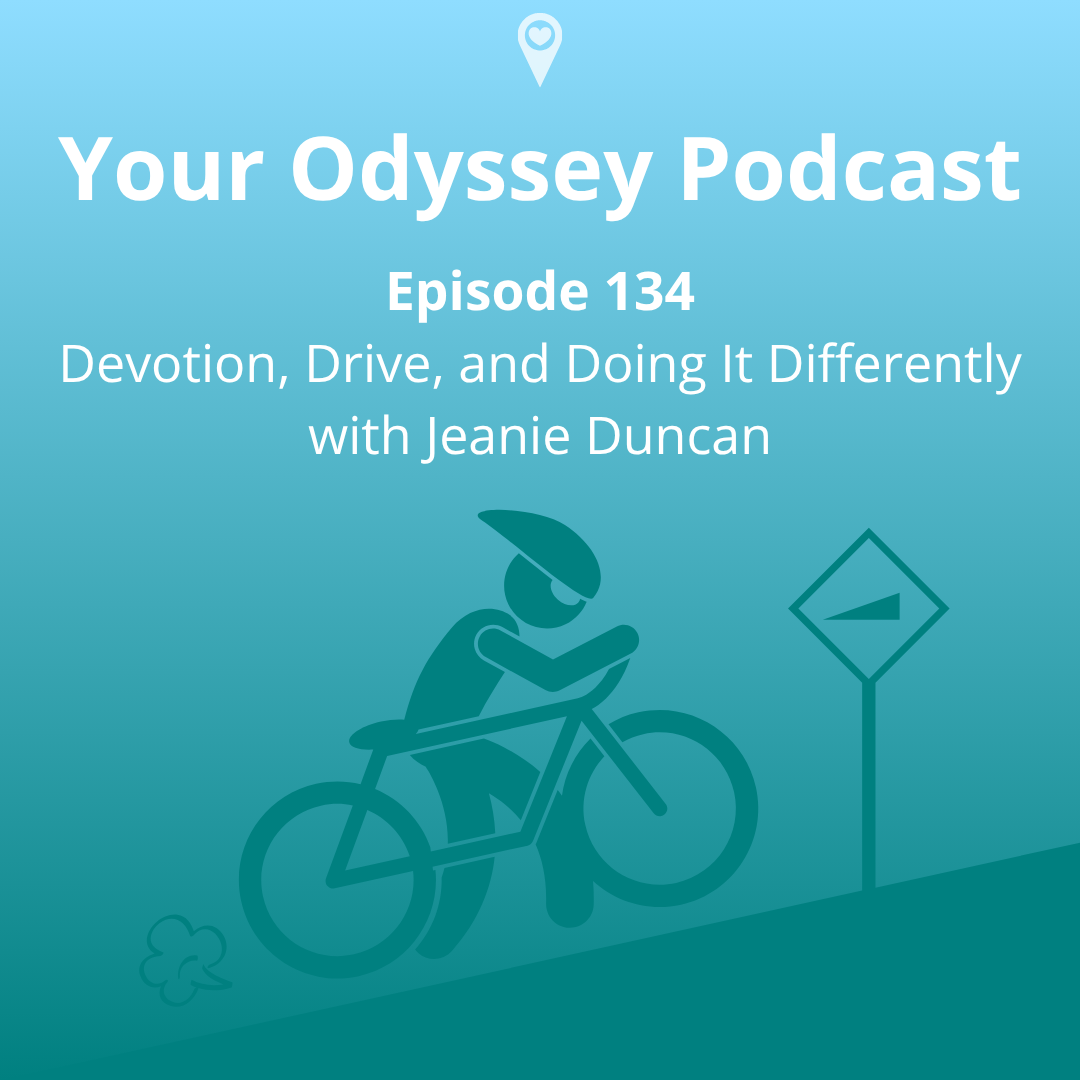
And then a second thing is something I've learned recently. That coaching experience was probably about four years ago now, and something more recently, just a few weeks ago, training for this cycling event, and I was out riding one morning, and I've got some things in my business that I'm working on in planning and launching right now.
And that drive in me is so alive. And I am just pushing, pushing. I mean, I can drive like nobody's business.
You can drive. I can freaking drive.
I don't even think about it. It just happens. But the way that I do it is not. It really isn't the healthiest. So I don't advise it for anyone. But what came to me as I was cycling was devotion over discipline.
And the reason I'm cycling is to actually help me with what I'm developing and launching in my business, because I realize that I'm not doing it in a way that's the healthiest and I'm overdriving still.
It's something I'm always working on.
And also I wanted to lift up out of it. I needed to get myself out of my work and into something that's another passion of mine. I love working out. I love pretty much Anything wellness related. And I love being outdoors in nature. And so I signed up for this cycling event, and not just any event, mind you. It's like, you know, riding across North Carolina in a week. And the most I've ever ridden at one time in My life was 40 miles. And I was in my 20s at the time, so this was a huge. So this is Jeanne's drive. It's not. Let's don't just go sign up for a two day event, but it's a big deal.
[00:28:17] Speaker B: This is Jeannie's drive, like finding balance.
[00:28:22] Speaker C: But it is teaching me. It is teaching me balance in it. It really is. And you have to be open to that, of course.
But the devotion over discipline and then this other executive coaching experience that I had was teaching me to do it differently.
And I don't know that I've ever spoken the word devotion other than like when I was a kid and in church and we did devotionals and stuff like that, but I don't use that word. And I'm on my bike one.
And it came to me as if a voice spoke it. Not. That did not happen, but I received it. The download was that clear that it's devotion, not discipline. So quit.
It was like a quit.
Pressing and applying force and rigor, you know, to. To do the things that I was doing in my business and instead allow the love of the thing to put. Pull me forward.
And that's what got my book written, you know, back in 2022. That's what got my podcast launched earlier this year, is the love of the thing ended up being so compelling, it pulled me forward instead of me pushing and pressing and the cycling that I was doing, same thing.
[00:29:46] Speaker B: I knew it was gonna happen at some point.
[00:29:48] Speaker C: Well, it is. It is emotional. You love something.
[00:29:51] Speaker B: Yeah, yeah, yeah.
[00:29:53] Speaker C: If you really allow yourself to be with the love of the thing and to let go of the efforting and the rigor.
So this cycling, there were times that I'm like, I had this huge wall calendar, you know, one of those dry erase calendars on my wall with my training plan. It's been six months.
I saw that and every block. That's right. You stayed with me, saw that.
[00:30:21] Speaker B: I was like, lord, man, every block to me.
[00:30:25] Speaker A: Karen, what are you talking about?
[00:30:28] Speaker B: Yeah, of course it would.
[00:30:32] Speaker C: Every block of that calendar is filled in for six months. Like I'm doing something. But what I love is some of the blocks say rest, you know, day off, rest.
And some of the blocks that were filled in with things to do.
I chose not to. Because my body is like, I'm tired.
Tired of getting up when the number starts with a five. And getting.
[00:30:54] Speaker B: And being okay with that. With having those days. Right. Like, letting ourselves have those days. Right. Instead of pushing through that.
[00:31:01] Speaker C: Yeah.
[00:31:01] Speaker B: You're not quitting. You're not dismissing. You're just listening.
[00:31:05] Speaker C: Yeah.
And letting go. Like, not caring about telling my friends, no, I'm not showing up today.
I'm not meaning to let you down, but I'm not coming. Because I need to do something different. I need to make a different choice. And that devotion has helped me lighten up and I need to lighten up.
The other example, answering your question is the executive coach was asking me about my drive, and she had me. We were in the woods because she's a forest guide.
She's that kind of amazing coach, does her workout in nature.
And she was asking me where I felt drive in my body.
And I stood in the forest and I closed my eyes and I really tried to attune to it. And it felt like a steel rod along my spine.
Like, strong. I was standing in this power stance, tall and straight and strong, imagining that silver steel in my body.
And she had me unfold it, you know, about what's good about it and what is it like? And then what might it be holding me back from? So we were working with it, and then she asked me to imagine a different form of drive.
A drive that.
What might it need to be now or what might it need to be going forward? You know, how do I want it to be different?
And I got this image instantly of this, like, liquid silver. Like, it was liquid, like, paint this beautiful. Okay, so I love gray. Gray is my. Gray is my favorite.
It. It was this silver paint, like, and she asked me where I felt it in my body, and it was just flowing still along my spine, but it was flowing, it was fluid, it was beautiful, like velvety silver.
And it was warm, like, not that cool like, or cold steel bar. It was this warm, velvety, fluid drive.
And that visceral imagery has helped me form a completely different relationship with that value of mine. Like, so it's not to say stop having drive or stop doing drive.
It's how can you do it in a way that is really serving you, serving others, and also that's sustainable because it just wasn't sustainable. It was like some of these things feel like it was killing me. I was killing myself.
[00:33:52] Speaker B: Yeah, a metal rod will do that.
I mean, one way or the other, it's going to cause some Issues?
Yeah. Oh, I was picturing like the mercury in a thermometer, right? Is that mercury? What is that silver? What is that?
[00:34:03] Speaker A: It is in a non digital thermometer.
[00:34:05] Speaker B: That is like, I was picturing that being more like fluid and stuff. Like. And I've seen paint like that metallic sort of.
It does have sort of a warmth to it. And I feel like I just got the title of the episode, which is Devotion Drive and doing it differently.
So I just wanted to say that. So I.
Okay, Tara, did I just see something hit you?
[00:34:28] Speaker A: As Jeanne was describing the transition from the cold steel to the warmth of fluid, the word that came to me was literally this morning while I'm stretching, doing a cool down on a mat was sustainability. Because I was thinking about where we are in the year. It's the last three months of the year, approaching the last 90 days of the year. And I was asked, like, what?
How do you want to close the year? It's never been about hustling and grinding towards the end of the year, y'. All. We are approaching winter here in the Northern hemisphere. Like, I'm not grinding and barreling towards the end of the year. I'm thinking about that this morning and I was like, Q4. I want my Q4 and the things that I'm building to be sustainable. Like, I don't want it all to just rest on me and pushing and pulling, like you said, letting the devotion pull you instead of you pulling and pushing and trying to make it be like that.
Literally this morning, sustainable was the word. And I was like, well, of course it's sustainable. All right, then I guess that's the focus for Q4. I was like, thank you for that.
It's like making sure. Because I. What you said about driving with the best of them, like, I can plan and over plan and do everything.
[00:35:32] Speaker B: She's a planner.
[00:35:33] Speaker A: This year I've done it a little bit differently. Like, even yesterday, like, I showed my husband my calendar on Wednesday, I was like, look at tomorrow. Look at all these blocks. It's going from 9:00am to 9:00pm like, what is that? I was like, yeah, I got schoolwork and I got business things I need to do. Then get to yesterday. And I'm like, this is going to Friday. This is moving to next Tuesday. This is like, what do I have to get done? Like, what do I have the capacity for? Which leads to this morning being sustainability. Like, I don't gotta push and do all of the things right now.
What has to get done and then move from there and if it gets done, fantastic. If it doesn't, there's a grace and compassion that we can offer ourselves rather than, oh, no, my drive is broken because I didn't do the thing that. That I said I was going to do. Which brings us somehow all the way back to the marathon. Like, what did you say, Karen? You said f the goal, but not really. It's like you're. You're. And your commitment to that is the thing that's been propelling you. That is the thing that's made it more sustainable for you. So whether you make it from the mountains to the coast, I don't even think that's the point. It's like you were committed, and in this time, you've gotten a new definition for your drive. You've gotten a new relationship to the word devotion. So I feel like it's already paid
[00:36:49] Speaker B: you back, it's already served, it's already done.
[00:36:52] Speaker C: So true. So true.
[00:36:54] Speaker B: You know, I mean, I like a goal just as much as the next girl, but, you know, the invitation is
[00:37:00] Speaker A: to do it differently. That's what I like. The invitation is to do it differently. You said it. That is the invitation. Like, we so often we're trying to force it when. If we move to the warm, fluid state, like, it'll actually come a lot easier because you're not forcing it.
[00:37:17] Speaker C: Yeah. And what's coming up for me with you landing there is like, oh, my God. And I am never there. I am always working on this, always working on this every day.
[00:37:29] Speaker B: Yeah. Yeah.
[00:37:30] Speaker A: Yes, you're human. We all said, yeah, yeah, yeah.
[00:37:35] Speaker C: Yep.
[00:37:35] Speaker A: Amen.
[00:37:36] Speaker B: Preach, Jeannie.
We're like, we haven't made Jeannie cry yet, but she's made both of us cry. So, like, yeah, right.
The resonance is like. It's like, feel like deeply.
[00:37:48] Speaker A: There's. Yeah. A lot of connections have definitely been made in. In this conversation.
This was an amazing part one conversation with Jeannie. We've covered a lot of ground here, and I feel like there's a beautiful thread in this conversation about personal transformation and changing your expectations or maybe even releasing your expectations about the things and just being comfortable with who you are and how you're showing up in all of these situations. Which leads me to our song for this episode.
This song is from one of our favorite artists, Brand New Me by Alicia Keys.
[00:38:33] Speaker B: Here we go.
[00:38:37] Speaker A: Check out this week's song on the YO Podcast playlist on Spotify.
[00:38:46] Speaker B: Took a brave, brave girl.
[00:38:49] Speaker A: He said brave.
She was talking about being open.
Be careful with your ego.
[00:38:57] Speaker B: Holy con. That Was amazing. Like, that was the frosting on the episode. Holy cow.
Well done, Tara.
[00:39:09] Speaker A: Thank you.
[00:39:10] Speaker B: So good.
[00:39:12] Speaker A: Well done Journey. Okay. Yes.
It's the expectations in the way that you grow and challenge yourself just by being you. Like, that's, that's what we talked about. That's, that's how it goes. That's, that's.
[00:39:30] Speaker C: Yeah.
[00:39:30] Speaker A: That's how we create the life. That's how we co create the life that we want to leave our truest life bolstered with authenticity. So that was great. That was great. All right then.
Well, now that Alicia has reminded us of our brand new sales, a brand new me, it is time for our question of the day.
Yeah.
What's one choice you've made that brought you closer to yourself?
[00:40:10] Speaker B: Well, I'll just say it sort of with a wide sweep.
Leaving my, the full time day job and sort of banking on myself and following my heart, following my dream to start my own business.
Eight years ago now it was 2019.
Well, there's the cycle.
[00:40:41] Speaker A: There it is, completion.
[00:40:44] Speaker B: How about you?
[00:40:45] Speaker A: The choice that's brought me closer to myself. This is going to cover a different dimension of wellness. But my choice to reconnect with my faith and my spirituality, like, that's produced a groundedness in me that up until three, four years ago, it was almost an inherited faith. Like a faith that was a foundation. Like the faith of like my grandparents. The faith of like that I was born into. Not necessarily saying like, I didn't understand it, but my level of understanding, understanding shifted. Looking back, like, oh, you know, it's more than just the music. It really is more about like, who I am in all of the spaces. It's more about the individual relationship than just being caught up in like, well, I checked the box, I said my prayers, I went to church, I did this thing. It's just like, it's bigger than that girl.
[00:41:41] Speaker B: It's not just the ritual, right?
[00:41:43] Speaker A: It's not just the ritual. So, like that one, the reconnection and like, was a reawakening for me. It's like, oh, we talked about when the corporate rug, the tablecloth was put off. It's like, oh, you needed this. And it of course, in hindsight was perfectly timed. Like, you're going to need to come back to this foundation. You're going to need something that's more stable than a corporate job. You're going to need something more stable than even a friendship. You're going to need something that's going to keep you anchored and rooted as you navigate all of the change and transition towards your brand new self. Like you're going to need that. So that is the one that's brought me closer to who I am definitely, definitely now, today. So, yeah, that's. That's it. That's my answer.
[00:42:26] Speaker B: That's good. And it's so true. Yeah. It's been really, it's been really a rock for you, right?
[00:42:30] Speaker A: Yeah, absolutely.
[00:42:32] Speaker B: Yeah.
[00:42:32] Speaker A: I have A quote from Mr. James Baldwin for this episode.
Not everything that is faced can be changed, but nothing can be changed until it is faced.
[00:42:54] Speaker B: Well, that is just some Buddha wisdom right there.
Wow.
You have to see it, you have to become aware of it to be able to make a conscious choice about a change, a shift. Yeah, I love that.
[00:43:09] Speaker A: Yeah. And we talked a little bit about the discernment about what is yours, what's not yours. Like you come up to it and be like, that's not, not mine. Or that's not how I'm doing this. Doing it differently.
[00:43:19] Speaker C: Right?
[00:43:20] Speaker B: Choosing to do it differently every day.
[00:43:22] Speaker A: Every day, every single life.
[00:43:25] Speaker B: Brand new choice.
[00:43:28] Speaker A: Oh my goodness. Exora, thank you for joining us for part one of our conversation with Jeannie Duncan. May you offer yourself compassion as you discover what matters most to you. And remember that choosing yourself doesn't mean you have to have every answer before you move.
[00:43:50] Speaker B: Yes, choosing yourself doesn't mean you have to have every answer.
Oh explorers, may you find that light, that excitement, that joy, that love, that devotion that pulls you towards something, towards the next version of you, towards your expansion, your growth, your evolution. May you see how beautiful and unique you are. Thank you for joining us. We love you so much. Take good care.
Thank you to Queenies in downtown Durham for the use of their community podcast studio and for welcoming us so warmly. Each week we'd like to give a shout out to Coco Cinnamon, the birthplace of 1023 Media and the yo podcast. Please support your local women owned minority owned coffee shop in downtown Durham.
Brought to you by Durham based 1023 Media, a heart centered woman owned multimedia company.